THERE IS NO BETTER WEALTH THAN HAVING A GREATER HEALTH...! Online AYURVEDA Consultation | TRANSPARENCY | CONFIDENTIALITY | DIGNITY
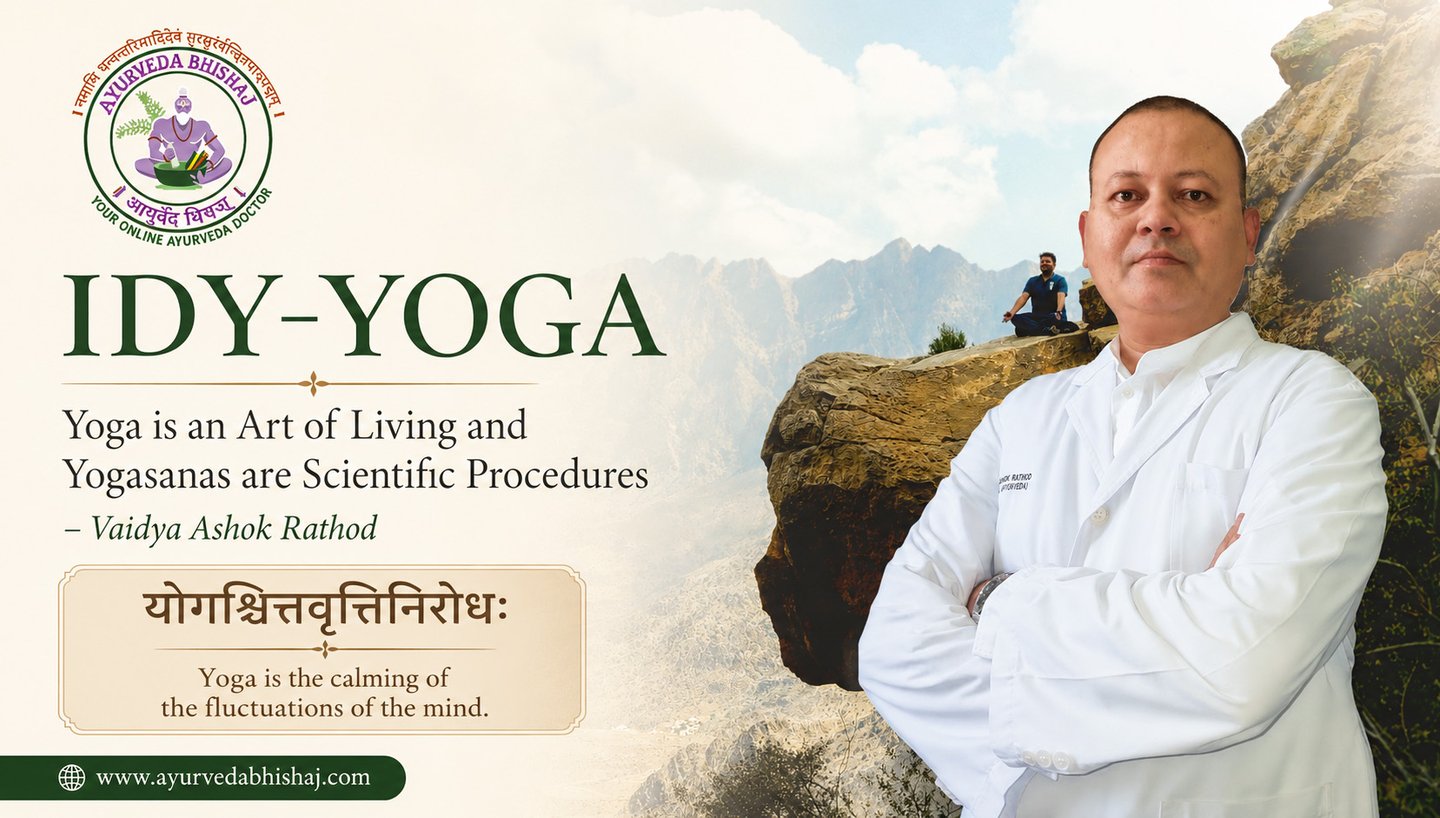
IDY-YOGA: Yoga Is an Art of Living & Yogasanas Are Scientific Procedures by Vaidya Ashok Rathod
Explore Yoga as an art of living and Yogasana as a scientific procedure with Sanskrit wisdom from Patanjali and Bhagavad Gita, explained by Vaidya Ashok Rathod.
Admin
6/21/20264 min read
Namaste!
Yoga is not merely a posture. Yoga is not only flexibility. Yoga is not a one-day celebration. Yoga is a complete art of living — a timeless science that teaches human beings how to live with balance, awareness, discipline, strength, compassion, and inner peace.
On the occasion of International Day of Yoga, we must understand Yoga in its true depth. The word “Yoga” comes from the Sanskrit root “Yuj”, which means to unite. It is the union of body, mind, breath, senses, intellect, and consciousness. When this harmony is achieved, life becomes healthier, calmer, more purposeful, and more meaningful.
Today, many people see Yogasana as physical exercise. But in reality, Yogasanas are scientific procedures. Every asana has a method, alignment, breathing pattern, pressure effect, relaxation effect, and mental effect. When practiced correctly, Yogasana supports the muscles, joints, spine, circulation, digestion, respiration, nervous system, endocrine balance, and emotional stability.
Yoga Begins With the Mind
Maharshi Patanjali defines Yoga in one of the most powerful Sanskrit verses:
योगश्चित्तवृत्तिनिरोधः॥
Yogaś citta-vṛtti-nirodhaḥ.
Yoga is the discipline of calming the fluctuations of the mind.
This means Yoga is not only about bending the body; it is about training the mind. A restless mind creates stress, confusion, impulsive decisions, poor sleep, wrong food habits, emotional imbalance, and disturbed health. Yoga brings the mind back to steadiness. When the mind becomes calm, the body starts responding positively.
This is why Yoga is deeply connected with Ayurveda. Ayurveda protects life through right diet, right lifestyle, seasonal discipline, and personalized health wisdom. Yoga strengthens this journey by creating awareness, discipline, and self-control.
The True Meaning of Yogasana
Maharshi Patanjali explains Asana beautifully:
स्थिरसुखमासनम्॥
Sthira-sukham-āsanam.
An asana is a posture that is steady and comfortable.
This verse destroys a major misconception. Yogasana is not a competition. It is not about forcing the body. It is not about painful stretching. A true asana is steady, comfortable, mindful, and controlled.
If the body is shaking, the breath is disturbed, and the mind is irritated, it is not true Yoga. In authentic Yogasana practice, the body becomes stable, the breath becomes smooth, and the mind becomes peaceful.
That is why Yogasana must be practiced with proper understanding, not ego.
Yogasana as a Scientific Procedure
A properly performed Yogasana has four important dimensions:
1. Body alignment – It protects joints, muscles, spine, and posture.
2. Breath regulation – It connects the body with the nervous system.
3. Awareness – It trains the mind to remain present.
4. Relaxation – It allows the body to absorb the benefit of the posture.
For example, forward-bending postures calm the nervous system and support flexibility. Twisting postures help spinal mobility and abdominal stimulation. Back-bending postures open the chest and improve posture. Balancing postures improve focus, coordination, and confidence. Relaxation postures reduce physical and mental fatigue.
Therefore, Yogasana is not random movement. It is a structured, intelligent, scientific method of body-mind regulation.
Yoga Teaches Balance in Life
Bhagavad Gita gives one of the most practical definitions of Yoga:
समत्वं योग उच्यते॥
Samatvaṁ yoga ucyate.
Equanimity is called Yoga.
This is the heart of Yoga. A person who remains balanced in success and failure, praise and criticism, comfort and difficulty, gain and loss — that person is truly practicing Yoga.
In modern life, people are surrounded by deadlines, digital distraction, emotional pressure, unhealthy eating, irregular sleep, and constant comparison. Yoga teaches us not only how to stand on a mat, but how to stand steady in life.
Yoga makes a person less reactive and more responsive. It improves patience, clarity, emotional strength, and decision-making.
Yoga Is Skill in Action
Another powerful verse from Bhagavad Gita says:
योगः कर्मसु कौशलम्॥
Yogaḥ karmasu kauśalam.
Yoga is excellence and skillfulness in action.
This means Yoga is not escape from life. Yoga makes us better in life. A true practitioner becomes more disciplined, more efficient, more aware, and more compassionate.
Whether you are a doctor, teacher, student, entrepreneur, homemaker, senior citizen, or professional, Yoga improves the quality of your action. It teaches you to perform your duties with focus, sincerity, and balance.
Yoga and Ayurveda: Two Wings of Healthy Living
Ayurveda and Yoga are sister sciences. Ayurveda teaches us how to live according to our Prakriti, digestion, season, age, strength, and disease tendency. Yoga helps us develop the discipline to follow the right lifestyle.
Ayurveda asks: What should I eat? How should I sleep? What is my body type? What lifestyle is suitable for me?
Yoga asks: How can I become aware? How can I regulate my mind? How can I breathe better? How can I live in balance?
Together, Ayurveda and Yoga create a powerful foundation for preventive health, chronic disease management, mental wellness, graceful ageing, and spiritual growth.
Yoga Is Not One Day — It Is a Daily Way
International Day of Yoga is a beautiful reminder, but Yoga should not remain limited to one day. The real benefit of Yoga comes from regular practice.
Even 20–30 minutes daily can create a meaningful difference when practiced with sincerity. A simple routine may include gentle loosening, Surya Namaskar, selected Yogasanas, Pranayama, meditation, and relaxation.
But one important point must be remembered: Yoga should be personalized. Children, elderly people, pregnant women, patients with heart disease, spine problems, arthritis, obesity, hypertension, anxiety, or chronic illness should practice under proper guidance.
Yoga is powerful — and like every powerful science, it must be practiced wisely.
The Takehome Message:
Yoga is the art of living because it teaches us how to breathe, how to think, how to eat, how to act, how to rest, how to respond, and how to live with awareness.
Yogasanas are scientific procedures because they work through posture, breath, circulation, nervous system regulation, musculoskeletal balance, and mental focus.
Yoga does not only change the body. Yoga transforms the way we live.
On this International Day of Yoga, let us not reduce Yoga to a photo, posture, or social media trend. Let us understand it, respect it, and practice it as a lifelong discipline.
Yoga is not about touching the toes. Yoga is about touching the deeper intelligence within.
— Vaidya Ashok Rathod
M.D. Ayurveda | Ayurveda, Yoga & Lifestyle Guidance
Ayurveda Bhishaj
Specialized Ayurvedic Doctor with 20+ years experience.
Contact :
Email: ayurvedadoctor@ayurvedabhishaj.com
© 2024. All rights reserved.